
Fallout 4’s Recent Plunge in Player Ratings: A Deep Dive into Community Discontent and the Troubled ‘Next-Gen’ Update










Popular Now
 Minecraft
 Call of Duty
Counter-Strike 2
Call of Duty
Counter-Strike 2
 Roblox
 Grand Theft Auto V
 Schedule I
 Valorant
 Sonic the Hedgehog™ Classic
 Brawl Stars
 God of War Ragnarök
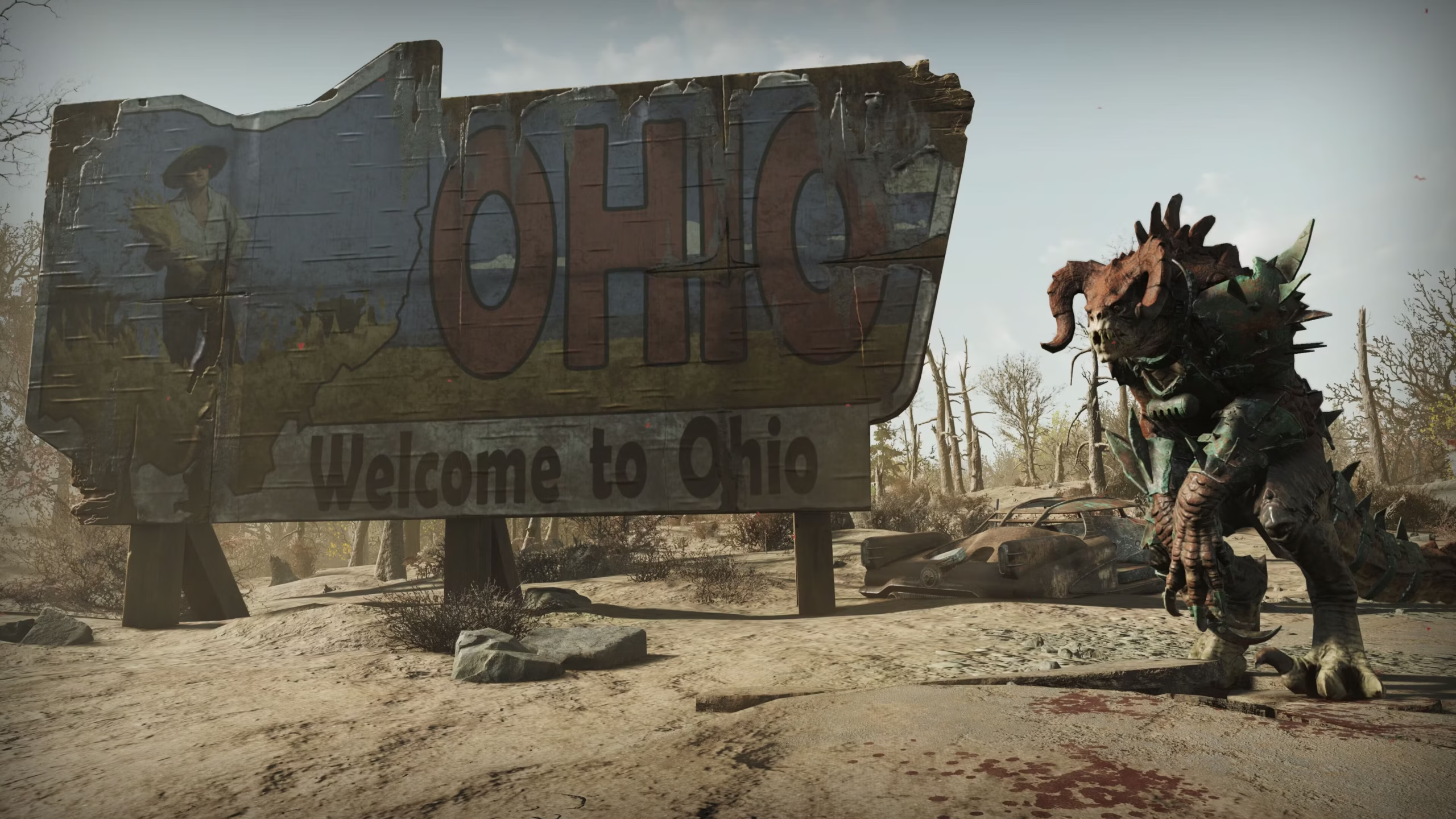
Fallout 4’s Steep Decline: Unpacking the Lowest Player Ratings
In a recent development that has sent ripples through the gaming community, Bethesda’s 2015 behemoth, Fallout 4, has hit its lowest player rating on record across major digital distribution platforms. While the news might seem startling for a title once hailed for its expansive open world and compelling exploration, for many long-time fans and critics, this downturn comes as little surprise. The confluence of an aging game engine, evolving player expectations, and particularly, the highly contentious ‘next-gen’ update, has culminated in a significant shift in public perception and a palpable sense of disappointment.
For years, Fallout 4 maintained a respectable if not stellar, reputation. Its blend of post-apocalyptic exploration, crafting, and signature Bethesda role-playing elements captivated millions, securing its place as one of the best-selling titles of its generation. However, the gaming landscape has transformed dramatically since its initial launch. New benchmarks for graphical fidelity, engaging narratives, and seamless gameplay experiences have been set by more contemporary RPGs and open-world adventures. This relentless march of progress has inevitably cast a harsher light on older titles, revealing their inherent limitations.
The Catalyst: Fallout 4’s Controversial ‘Next-Gen’ Update
The most immediate and perhaps devastating blow to Fallout 4’s standing arrived with the much-anticipated ‘next-gen’ update released in April 2024. Billed as a significant enhancement for PlayStation 5, Xbox Series X|S, and PC, promising performance modes, quality-of-life improvements, and stability fixes, the reality for many players, especially on PC, was a stark contrast to the promised vision.
- Performance Degradation: Far from improving performance, numerous reports flooded forums detailing severe frame rate drops, stuttering, and overall instability, even on high-end hardware. Players expecting smoother gameplay were instead met with a more erratic experience.
- Modding Ecosystem Disruption: Fallout 4 boasts one of the most vibrant and dedicated modding communities in gaming. The update, however, broke compatibility with a vast array of essential community-made mods, including the popular Script Extender (F4SE), which underpins thousands of fan creations. This effectively crippled many players’ custom game experiences, leading to widespread frustration.
- Lack of Significant Visual Overhaul: Despite being labeled ‘next-gen,’ many players found the graphical enhancements to be negligible or barely noticeable, especially when compared to the visual fidelity achieved by community texture packs and ENBs that were now rendered incompatible. The update offered little to justify the breakage it caused.
- Introduction of New Bugs: As is often the case with major patches, the update introduced a host of new bugs and glitches, further detracting from the gameplay experience and adding to the existing technical debt of the eight-year-old title.
These issues swiftly translated into a deluge of negative reviews on platforms like Steam, where the game’s recent review scores plummeted into the ‘Mostly Negative’ category, dragging down its overall average significantly. This critical mass of discontent highlights a fundamental disconnect between Bethesda’s implementation and the community’s expectations.
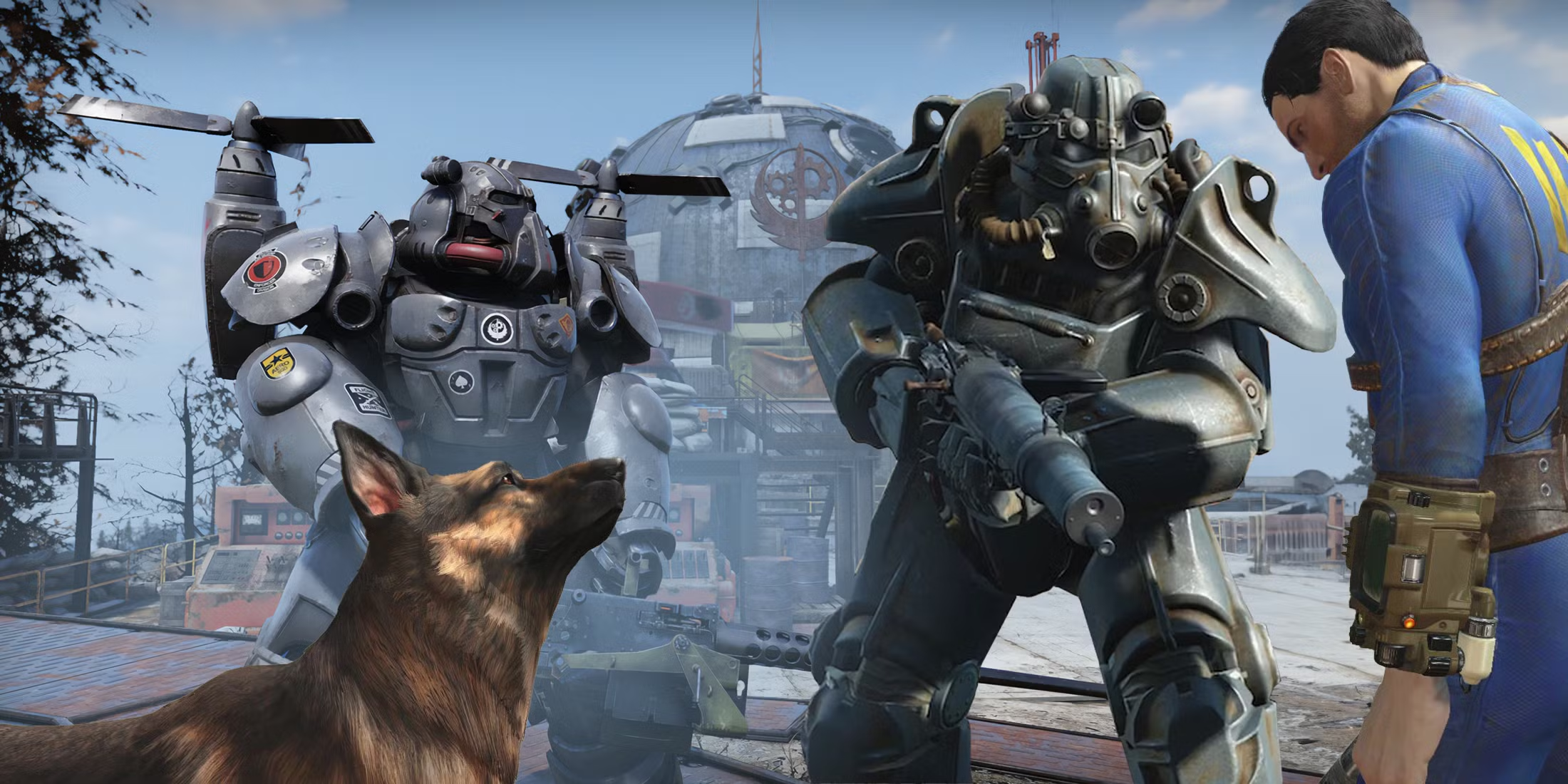
Underlying Issues: Why the Decline Was Inevitable for Fallout 4
Beyond the recent update debacle, several long-standing criticisms have always simmered beneath the surface of Fallout 4, contributing to its vulnerability to such a rating collapse:
- The Creation Engine’s Limitations: The foundational Gamebryo/Creation Engine, while familiar to Bethesda developers, has consistently shown its age. Its capacity for scale often comes at the cost of stability, graphical fidelity, and advanced physics, struggling to keep pace with modern engines like Unreal Engine 5 or bespoke proprietary engines from competitors.
- Streamlined RPG Mechanics: Compared to predecessors like Fallout: New Vegas, Fallout 4 was criticized for simplifying its RPG elements. The dialogue wheel, reduced skill checks, and a more linear approach to character progression left some veteran RPG enthusiasts feeling underserved. The depth of choice and consequence often felt shallower.
- Repetitive Quest Design: While the Commonwealth offers a vast world to explore, a significant portion of side quests, particularly the radiant quests tied to the Minutemen or settlement building, often felt repetitive and uninspired, leading to gameplay fatigue for many players.
- Narrative and Character Development: The main storyline, while engaging for some, was seen by others as less impactful or morally ambiguous compared to previous Fallout titles. The voiced protagonist, while innovative for the series, limited role-playing potential for many.
- Competition from Modern RPGs: The gaming market is saturated with increasingly sophisticated open-world RPGs. Titles such as Elden Ring, Baldur’s Gate 3, and the continually evolving Cyberpunk 2077 have raised the bar for narrative depth, player choice, and technical execution, making Fallout 4’s shortcomings more pronounced.
These core issues, inherent to the game’s design and technological foundation, meant that any significant misstep, such as a poorly executed ‘next-gen’ update, would inevitably trigger a backlash from a community already sensitive to these long-standing grievances.
The Broader Implications for Bethesda and the Fallout Franchise
The sharp decline in Fallout 4’s player ratings is more than just a momentary blip; it serves as a crucial feedback mechanism for Bethesda. In an era where player satisfaction and game performance are paramount, particularly with high-profile releases like Starfield also facing scrutiny, the lessons from Fallout 4’s recent struggles are vital. The PC gaming community, in particular, has become increasingly vocal about the quality of game launches and updates, demanding polished experiences and respecting existing modding ecosystems.
For the future of the Fallout franchise and Bethesda’s approach to legacy titles, this event could underscore the importance of:
- Thorough Testing: Ensuring that updates are rigorously tested across all platforms, especially PC, and with consideration for existing modding frameworks.
- Community Engagement: Transparent communication and perhaps even consultation with key community members and modders during the development of major patches.
- Strategic Investment: Understanding when a legacy engine has reached its limit and when a more significant technological overhaul or new engine might be necessary for future installments like Fallout 5.
- Prioritizing Core RPG Elements: Re-evaluating the balance between action, exploration, and deep role-playing mechanics that originally defined the franchise.
The current state of Fallout 4 is a powerful reminder that even beloved titles are not immune to critical re-evaluation in the dynamic world of video games. While its extensive modding scene and inherent charm will always hold a place in many hearts, the recent ratings plunge unequivocally signals that players demand more from updates and expect greater respect for the foundational elements that make a game truly enduring. This episode serves as a significant case study in the ever-evolving relationship between game developers and their dedicated player bases, highlighting the critical importance of listening to community feedback and delivering on promises, especially when dealing with such an iconic property.